


MANUAL AND AUTO
- Sep 8, 2017
- 2 min read
Fuel Economy
Previously, cars with manual transmissions were often noted for having better fuel economy. This is because earlier automatic vehicles used inefficient torque converters that would often slip, wasting fuel. Earlier automatic vehicles also had fewer gears (three to four gears), which meant that the engine had to rev higher at each shift. Today, automatic cars have more gears (six to eight gears) and refined torque converters that are locked when driving at high speeds that prevent slippage. This has made a six percent fuel economy improvement as compared to earlier automatic models. The advancements in modern automatic vehicles have drastically improved its fuel efficiency, putting it equal or close to the fuel economy of manual transmission cars.
Ease of Use
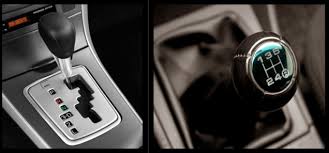
Manual vehicles are notorious for being tough to use for first time drivers. Unlike automatic vehicles that are fairly straightforward to operate, driving cars with manual transmissions entails shifting gears and working a clutch that meansgreater concentration and coordination is needed. For inexperienced drivers, stalling in a stop is a common occurrence in manual transmissions because of the lack of practice in coordination. Not only is a stalled car a hassle for the cars behind you but also a potential collision risk.
Heavy traffic is also a particular drawback for those with manual transmissions. In stop-and-go traffic, the driver operates the clutch pedal quite often and with the clutch pedal requiring a bit of force, it can cause fatigue for the driver’s leg and foot. Driving uphill or stopping at an incline is also another downside that also requires your constant use of the clutch pedal and your hand brake. Although drivers can easily get the hang of coordinating the shifting of gears and working a clutch, cars with an automatic transmission are still considerably easier to use.
Control & Upkeep
Although automatic transmissions are designed to choose the most suitable gear for any driving condition, it tends to also limit the driver’s control. Manual vehicles allow the driver to anticipate upcoming situations or to purposely select a lower gear for an added boost, whereas automatic vehicles do not. Manual transmission vehicles definitely provide greater flexibility when it comes to handling. Upkeep is another important element car buyers should take into account. For older or high mileage cars, manual cars are turn out more affordable to maintain. This is because manual transmissions only have mechanical gears that rely on the driver to engage, while an automatic transmission is far more complex with more parts and functions that can fail.


Comments